November 2026 Newsletter
Beyond the Graft: Why Kidney Health Matters in Transplantation
By Sumithira Vasu, MBBS, MD
 Presenting on transplant-associated thrombotic microangiopathy (TA-TMA) at the Onconephrology Symposium in Boston broadened my view of kidney health in cancer care. As experts discussed chemotherapy, immunotherapy, cellular therapy, and transplantation, we returned to the same question: How can we deliver effective treatment while preserving kidney function during therapy and long after it ends?
View Full Story
For HCT recipients, this question is familiar and urgent. Patients may begin transplant with reduced renal reserve, then encounter infection, medication toxicity, hemodynamic stress, and endothelial injury. Acute kidney injury can complicate treatment decisions; incomplete recovery can shape years of survivorship. TA-TMA highlights the need for transplant physicians and nephrologists to interpret kidney findings together within the context of the patient’s entire clinical course.
Kidney health remains consequential beyond day +100. International survivorship recommendations identify chronic kidney disease as a late complication that can emerge years after transplantation, and experts call for continued renal assessment.
Onconephrology brings this shared work into focus. It connects expertise in cancer treatment, kidney disease, chemotherapy dosing, and supportive care so that clinicians recognize renal complications early and manage them without losing sight of the underlying malignancy. As transplant and cellular therapies reach more patients, this partnership will become increasingly valuable. It also creates opportunities to study prevention, improve diagnosis, and measure outcomes that matter beyond the initial treatment period.
The field’s growth is international. The American Society of Onconephrology has helped build a community for education, research, and collaboration, while international and European nephrology groups have expanded opportunities to exchange expertise. Shared studies can bring together larger and more diverse patient populations and can help clinicians adapt kidney care across health systems. Transplant clinicians interested in contributing to this work can explore American Society of Onconephrology membership.
I left the symposium convinced that kidney outcomes belong at the center of our conversations about transplant success. Our goal is to help patients survive cancer treatment and live well afterward. Onconephrology gives us the expertise and partnerships to pursue both.
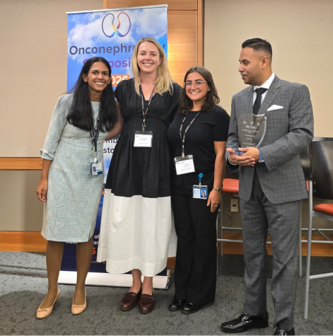
Shruti Gupta, MD (far left), and Raad Chowdhury, MD (far right), in Boston September 17-18, 2026.
Now Available: 2014-2024 CIBMTR Non-Malignant Summary Slides
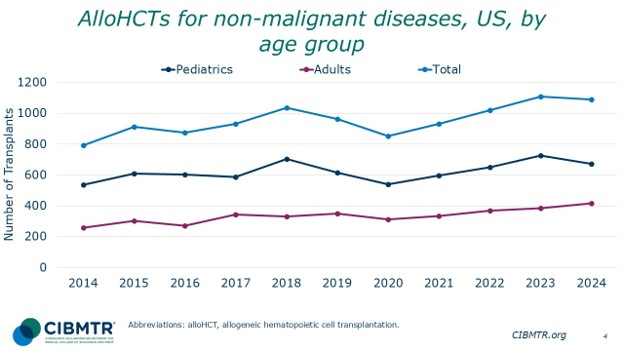
These summary slides detail the clinical practices, trends, and survival outcomes following hematopoietic stem cell transplantation and cellular therapy, including gene therapy for non-malignant diseases. These CIBMTR Summary Slides report data from 2014-2024.
Immunobiology Working Committee
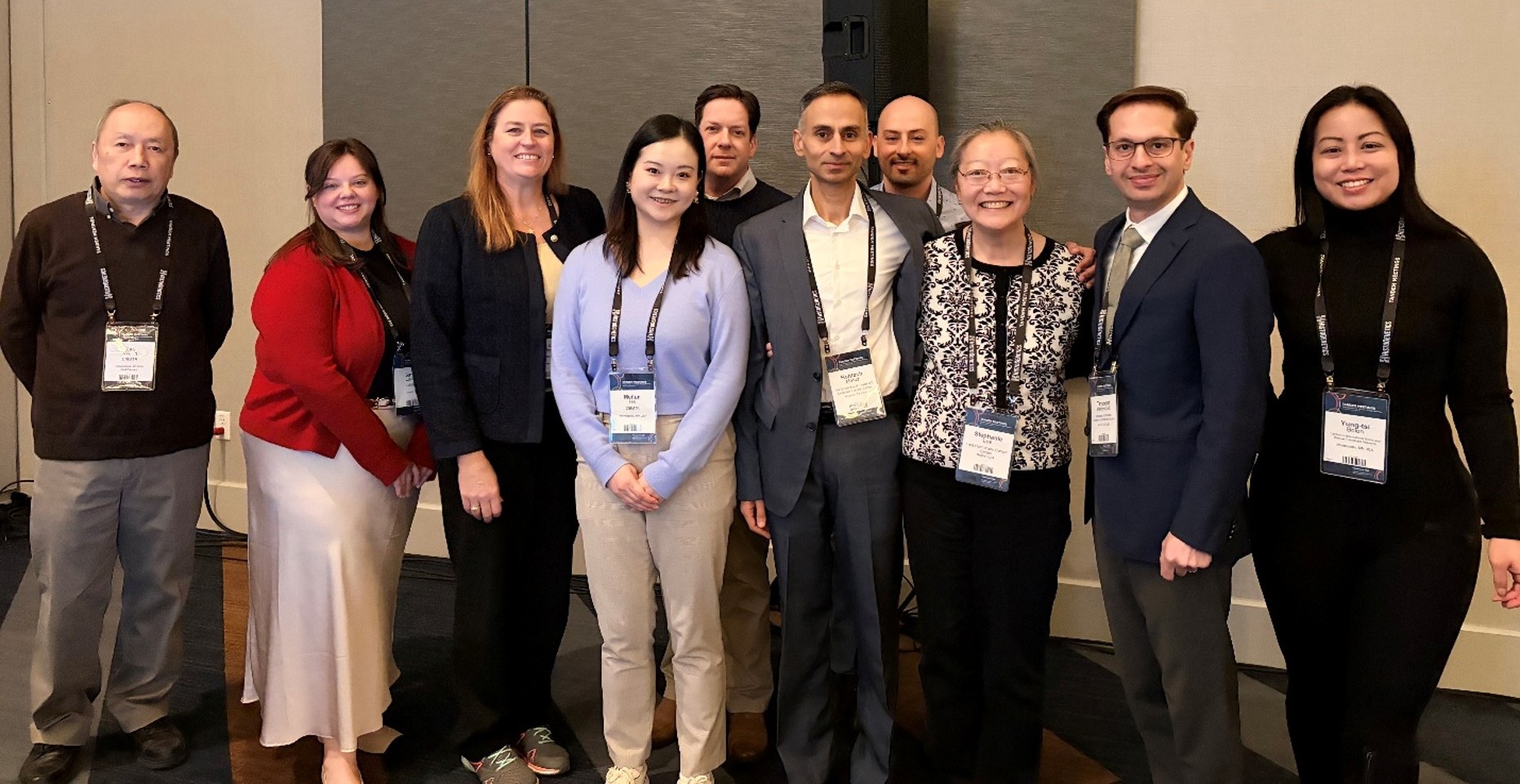
Pictured left to right: Tao Wang, Sarita Layton, Cara Benjamin, Meilun He (previous statistician), Brian Betts, Rohtesh Mehta, Esteban Arrieta-Bolaños, Stephanie Lee (previous Scientific Director), Taymour Hammoudi, and Yung-Tsi Bolon (previous Scientific Director).
With more than 180 scientific papers, the Immunobiology Working Committee is CIBMTR’s largest working committee by study volume. Since our last newsletter article in 2024, we have thanked and bid farewell to Stephanie Lee (Scientific Director) and Yung-Tsi Bolon (Scientific Director), and we welcome Rohtesh Mehta as our newest Scientific Director.
View Full StoryView Less
The Immunobiology Working Committee conducts studies to understand complex genetic, epigenetic, immune molecular, and cellular interactions that drive transplantation and influence post-transplant outcomes. Areas of focus include major and minor histocompatibility complex matching; natural killer and T cell repertoire; cytokines / chemokines; genomics; and other immune-response determinants. The committee also compares clinical outcomes across different donor types to inform donor choice (e.g., matched versus mismatched, related versus unrelated) and explores novel biostatistical and analytic approaches to investigate the impact of various types of HLA mismatches. Given the experimental and functional nature of this research, approximately one-third of the committee’s studies require sample testing. View the current sample inventory and request samples from the Immunobiology Research Program by following the instructions available on cibmtr.org.
The Immunobiology Working Committee currently has 7 studies in progress. Current investigations include:
- The role of SIRPα mismatch in HLA-matched donors
- Impact of adherence to cord blood guidelines
- HLA peptide-binding motif matching in haploidentical donor transplants
- HLA immunopeptidome divergence in unrelated donor transplants
- The effects of HLA and non-HLA factors in patients with aplastic anemia undergoing haploidentical transplantation
- HLA and non-HLA factors in patients with acute leukemia / MDS undergoing haploidentical transplantation
- Impact of a novel HLA Evolutionary Divergence Score on outcomes of AML recipients after haploidentical HCT
Successful proposals start with our research community members. We depend on bold clinical and scientific questions backed by strong preliminary data and testable hypotheses. Your diverse perspectives and expertise—from basic immunobiology to translational and clinical science—are what fuel our progress. Therefore, we encourage investigators to submit innovative proposals during the solicitation period (submission for the 2027 The Tandem Meetings | Transplantation & Cellular Therapy Meetings of ASTCT and CIBMTR has concluded, information for 2028 coming soon). We gather annually at the Tandem Meetings, with additional opportunities to connect throughout the year. We encourage all investigators with an interest in immunology, immunobiology, or human genetics to get involved with this committee. Feel free to contact leadership or staff to learn more or to discuss your research ideas and proposals. We look forward to collaborating with you and seeing you at upcoming meetings!
Peer-Reviewed Publications
- IB06-05i Petersdorf EW, McKallor C, Malkki M, et al. The association of HLA-E ligand and NKG2 receptor variation with relapse and mortality after haploidentical related donor transplantation. Transplantation and Cellular Therapy. 2025 Mar 1; 31(3):137-156. doi:10.1016/j.jtct.2025.01.004. Epub 2025 Jan 9. PMC11875940.
- IB22-03 Nath K, Zhang MJ, Bye M, et al. Transplant outcomes using older matched sibling donors compared to young alternative donors: A CIBMTR Analysis. Blood Advances. 2025 Jul 22; 9(14):3469-3478. doi:10.1182/bloodadvances.2024014858. PMC12274812.
- IB23-02 Mehta RS, Schmidt G, Williams K, et al. Choosing between HLA-mismatched unrelated and haploidentical donors: Donor age considerations. Transplantation and Cellular Therapy. 2025 Sep;31(9):680-692. doi:10.1016/j.jtct.2025.05.019. PMC12403200.
- IB22-01 McCurdy SR, Solomon SR, Shaffer BC, et al. Post-transplant cyclophosphamide improves survival in HLA-DPB1 mismatched unrelated donor allogeneic transplantation. Transplantation and Cellular Therapy. 2026 Jan 1; 32(1):74.e1-74.e14. doi:10.1016/j.jtct.2025.09.048. PMC12767214.
- IB10-01r Rafati M, Wang Y, Koppayi AL, et al. Germline pathogenic variants in MUTYH are associated with inferior survival after hematopoietic cell transplantation in patients with hematologic malignancies or disorders. American Journal of Hematology. 2025 Dec 1; 100(12):2442-2447. doi:10.1002/ajh.70093. PMC12892400.
- IB21-01 Saultz JN, Bolon YT, Wang T, et al. Higher HLA-DRB1 evolutionary divergence is associated with reduced relapse and improved survival after matched unrelated hematopoietic cell transplantation. Transplantation and Cellular Therapy. 2026 Apr 1; 32(4):434.e1-434.e11. doi:10.1016/j.jtct.2025.12.949. PMC13059967.
- IB10-01s Mendez KJW, Lee SK, Dagnall C, et al. Quantile regression of the relationship between demographic factors and leukocyte telomere length, measured by Southern blot and qPCR. GeroScience. 2026 Dec;48(6):8161-8169. doi:10.1007/s11357-025-02087-6. PMC13638946.
- IB06-05j Petersdorf EW, McKallor C, Malkki M, et al. Extended HLA haplotypes and transplant survival. Blood. 2026 Jul 23;148(4):508-520. doi:10.1182/blood.2025033031. PMC13487483.
Abstract Presentations
- IB23-02 Choosing between HLA-Mismatched Unrelated and Haploidentical Donors: Donor Age Considerations (R Mehta)
Poster Presentation, 2025 Tandem Meetings - IB23-01 Immunopeptidome divergence between mismatched HLA haplotypes and survival after haploidentical HCT: A retrospective study from the CIBMTR (P Crivello)
Oral Presentation, 2025 EBMT Meeting - IB23-03 Adherence to CB guidelines improves transplant outcomes in adults with hematological malignancies (L Metheny)
Poster Presentation, 2025 EBMT Meeting - IB23-01 Increasing immunopeptidome divergence between mismatched HLA haplotypes improves survival after contemporary haploidentical HCT (P Crivello)
Oral Presentation, 2025 EFI Meeting - IB15-04 Association between pre-transplant biological aging markers and clinical outcomes in allogeneic HCT recipients (K Rentscher)
Poster Presentation, 2025 ASCO Meeting - IB23-03 Avoidance of ATG improves outcomes in double-cord blood transplantation for hematological malignancies (F Milano)
Poster Presentation, 2026 ASH Meeting - IB17-03 Genetic Predictors of HCT outcomes in patients with myelofibrosis (M Rafati)
Oral Presentation, 2026 Tandem Meetings
Studies in Progress
- IB18-07 Donor and recipient genomic associations with acute graft-vs-host disease (V Afshar-Khargan). Submitted.
- SC19-07 A Novel KIR-HLA interaction scoring system and its effect on transplantation outcomes after HLA matched allogeneic HCT (A Toor / E Krieger). Submitted.
- IB09-01/09-03/09-05/09-07 Clinical importance of minor histocompatibility complex haplotypes in umbilical cord blood transplantation (E Petersdorf). Ongoing.
- IB22-02 Effect of SIRP? Mismatch on the outcome of allogeneic hematopoietic stem cell transplantation from an HLA matched related donor (J Zou / S Srour). Manuscript preparation.
- IB23-03 Impact of adherence to cord blood guidelines (L Metheny / F Milano). Manuscript preparation.
- IB23-01 Immunopeptidome divergence between mismatched HLA and outcome of haploidentical HCT (P Crivello). Manuscript preparation.
- IB10-01l Whole exome sequencing in SAA identifies unrecognized inherited subset with inferior survival after HCT (S Spellman). Ongoing.
- R04-74c Donor KIR3DL1 and HLA-B subtypes and leukemia control in HLA-compatible allogeneic hematopoietic stem cell transplantation (B Dupont / K Hsu). Submitted.
- R04-74f Functional significance of killer cell immunoglobulin-like receptor genes in human leukocyte antigen-matched and mismatched unrelated hematopoietic cell transplantation (B Dupont / K Hsu). Ongoing.
- IB24-01 6-locus HLA immunopeptidome divergence and outcome of mismatched unrelated HCT (E Arrieta-Bola / K Fleischhauer). Analysis.
- IB24-02 Effect of donor KIR and donor KIR ligand on CD8+ T cell-mediated alloreactivity in unrelated HCT for AML, ALL, and MDS (B Asquith). Analysis.
- IB25-01 Haploidentical donor selection for patients with aplastic anemia: HLA and non-HLA factors (R Mehta / A Ruggeri). Protocol development.
- IB26-01 Impact of novel HLA evolutionary divergence score on clinical outcomes of AML recipients after HCT (P Katikaneni / K Quann). Protocol development.
- IB26-02 Haplo-PTCy HLA donor characteristics and outcomes (T Hammoudi and Immunobiology Working Committee). Protocol development.
Committee Leadership
Co-Chairs:
- Cara Benjamin, University of Miami Miller School of Medicine, Miami, FL
- Brian Betts, Roswell Park Comprehensive Cancer Institute, Minneapolis, MN
- Esteban Arrieta-Bolaños, University Hospital Essen, Germany
Scientific Director:
- Rohtesh Mehta, MD Anderson Cancer Center, Houston, TX
Statistical Director:
- Tao Wang, CIBMTR MCW, Milwaukee, WI
Statistician:
- Sarita Layton, CIBMTR NMDP, Minneapolis, MN
CIBMTR Page Scholar:
- Taymour Hammoudi, Children's Hospital Colorado, Aurora, CO
Plasma Cell Disorders Working Committee
 |
 |
 |
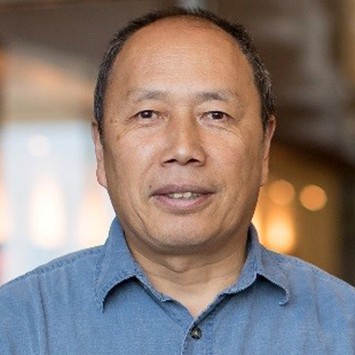
| Patrick Hagen, Co-Chair Loyola University Medical Center, Maywood, IL |
Taiga Nishihori, Co-Chair Moffitt Cancer Center, Tampa, FL |
Yvonne Efebera, Co-Chair OhioHealth, Columbus, OH |
 |
 |
 |
| Othman Akhtar, Scientific Director CIBMTR MCW Milwaukee, WI |
Tao Wang, Statistical Director CIBMTR MCW Milwaukee, WI |
Brent Logan, Statistical Director CIBMTR MCW Milwaukee, WI |
 |
||
| Temitope Oloyede, Statistician CIBMTR MCW Milwaukee, WI |
Multiple myeloma is the most common indication for autologous HCT in the US. The development of B-cell maturation antigen (BCMA) directed CAR T-cell therapy has dramatically changed the treatment landscape of multiple myeloma. The Plasma Cell Disorders Working Committee collaborates with investigators from around the world to define the optimal utilization of transplantation and CAR T-cell therapy for not only multiple myeloma but also other plasma cell disorders, such as light chain amyloidosis, Waldenström macroglobulinemia; monoclonal gammopathy of renal or clinical significance; polyneuropathy, organomegaly, endocrinopathy, monoclonal gammopathy, and skin (POEMS) syndrome; and plasma cell leukemia.
View Full Story
For the 2026 Tandem Meetings, the committee received 47 proposal submissions. We combined 25 submissions with similar or overlapping themes into 6 proposals and presented them at the 2026 Tandem Meetings. From those proposals, we accepted 2 as new working committee studies, representing a total of 6 individual submissions.
The Plasma Cell Disorders Working Committee always seeks interesting and novel ideas for study as well as encourages the involvement of junior investigators and those wanting to break into the HCT and outcomes research field. We believe early involvement encourages long-term participation of young investigators in committee activities. The committee aims to sustain this positive feedback loop and foster greater national and international integration of transplant and CAR T-related research, accelerating the discovery of cures for patients with these diseases.
The Plasma Cell Disorders Working Committee encourages all investigators with an interest in these diseases to propose a study. Visit the CIBMTR's How to Propose a Study webpage for information on submitting a proposal.
To learn more or discuss your research ideas and proposals, contact one of the members of the working committee leadership team. We encourage our more than 700 current working committee members to actively participate. We look forward to seeing you in February at the 2027 Tandem Meetings in Orlando, FL!
Noteworthy Accomplishments from This Committee Since 2025
Four Peer-Reviewed Publications
- MM23-01a Sidana S, Ahmed N, Akhtar OS, et al. Standard-of-care idecabtagene vicleucel for relapsed/refractory multiple myeloma. Blood. 2025 Jul 10; 146(2):167-177. doi:10.1182/blood.2024026216. PMC12964216.
- MM24-01a Hansen DK, Dima D, Mian H, et al. Safety and efficacy of ciltacabtagene autoleucel for relapsed/refractory multiple myeloma: A CIBMTR study. Blood Cancer Journal. 2026 Apr 14;16(1):80. doi:10.1038/s41408-026-01496-w. PMC13194909.
- CT23-02 Kaur G, Logue J, Brazauskas R, et al. Prolonged cytopenia after idecabtagene vicleucel for multiple myeloma is associated with poor overall survival. Transplantation and Cellular Therapy. S2666-6367(26):00490-2. doi:10.1016/j.jtct.2026.06.021. Epub 2026 Jun 16. PMC13560755.
- MM24-01b Mian H, Faisal MS, Chen T, et al. Efficacy and safety of frail patients treated with ciltacabtagene autoleucel in the real world: A Center for International Blood and Marrow Transplant Research analysis. Cancer. 2026 Oct 1;132(19):e70614. doi: 10.1002/cncr.70614. PMC13601916.
Four Abstract Presentations
- MM24-01a Safety and efficacy of ciltacabtagene autoleucel for relapsed/refractory multiple myeloma: A CIBMTR registry study (D Hansen)
Poster Presentation. 2025 IMS Meeting - MM24-02 Real-world comparison of anti-BCMA CAR T-cell therapies in relapsed or refractory multiple myeloma (A Afrough)
Poster Presentation, 2025 IMS Meeting - MM24-01b Efficacy and safety of frail adults treated with ciltacabtagene autoleucel in the real-world: A CIBMTR analysis (H Mian)
Oral Presentation, 2025 ASH Meeting - MM24-02 CIBMTR real-world comparison of ide-cel and cilta-cel in relapsed / refractory multiple myeloma (M Krem)
Late-Breaking Poster Presentation, 2026 Tandem Meetings
Seven Ongoing Studies
- MM20-02b Risk factors for and characteristics of second primary malignancies following autologous HCT for multiple myeloma (B Ragon/ M Shah/ S Usmani). Data file preparation.
- MM22-01 Outcomes of autologous hematopoietic cell transplantation for light chain deposition disease (H Hashmi/ B Dhakal). Protocol development.
- MM24-02 Real-world comparison of anti-BCMA CAR T-cell therapies in relapsed or refractory multiple myeloma (M Mohan/ C Schinke/ A Bidikian/ L Gowda/ C Freeman/ D Hansen/ S Gupta/ A Afrough/ L Anderson/ M Janakiram/ S Goldsmith/ S Ahmed/ K Patel/ M Krem/ N Ahmed). Manuscript preparation.
- MM25-01 Predictors of early relapse and durable remissions in patients with multiple myeloma treated with BCMA-Targeted CAR T cell therapy (A Ali/ M Janakiram/ G Kaur/ H Hasmi/ S Mailankody/ S Usmani). Analysis.
- MM25-02 Outcomes of out-of-specification BCMA-directed CAR T-cell therapies in patients with heavily pretreated relapsed / refractory multiple myeloma (D Dima/ D Hansen). Analysis.
- MM26-01 BCMA-directed CAR-T cell therapy in plasma cell leukemia (N Sharma/ S Devarakonda). Protocol development.
- MM26-02 Role of stem cell transplant and maintenance therapy in the management therapy in the management of AL amyloidosis in the era of Daratumumab (H Shaikh/ E Muchtar/ S Maqbool/ F Anwer/ Z Gong/ M S Faisal/ Y Efebera/ R Tokarski/ S Devarakonda). Protocol development.
Save the Date for the 2027 Tandem Meetings!

By the Tandem Meetings Planning Team
Register now for the 2027 Tandem Meetings | Transplantation & Cellular Therapy Meetings of ASTCT® and CIBMTR®, taking place February 17–20, 2027, in Orlando, FL.
View Full Story
 |
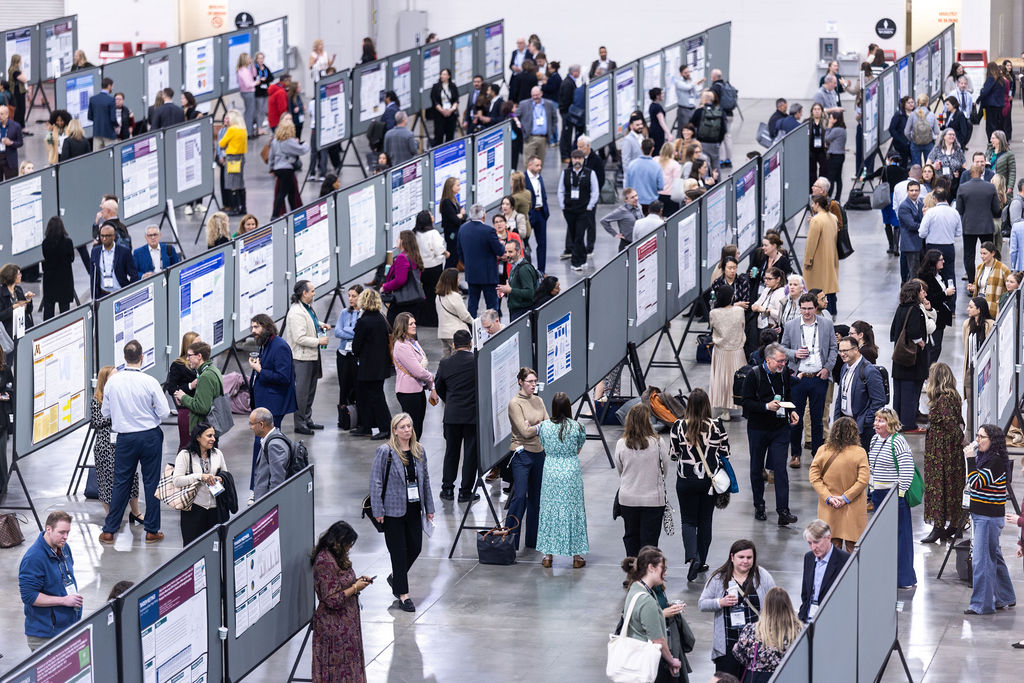 |
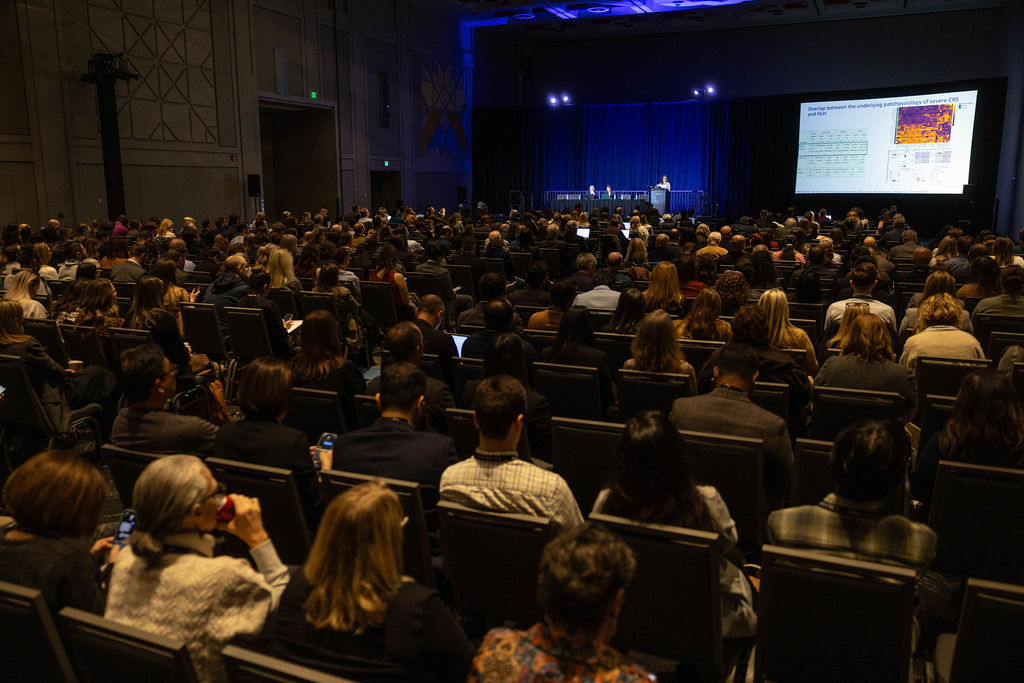
The Tandem Meetings bring together physicians, researchers, nurses, pharmacists, physician assistants, trainees / fellows, and administrators from around the world to discuss the latest advancements in cellular and gene therapy and HCT.
Register and join us as an In-Person Attendee or Digital Access Attendee to advance your expertise through expert-led education and groundbreaking research. All attendees will have access to On-Demand Session Recordings and continuing education credits for up to 30 days post-event.
After registering, book your hotel within the Tandem Meetings Housing Block and visit the housing page for more details.
Visit the Tandem Meetings Website for additional details, including the Program Agenda.
Support the meetings and promote your organization through exhibits, sponsorships, and branding opportunities. Learn more and reserve your spot at the Exhibitor and Sponsor pages, respectively.
We look forward to seeing you in Orlando!
Follow ASTCT, CIBMTR, and #Tandem27 on social media for updates.
Exciting Update for 2027 Tandem Meetings: New Data Management Track
By Jillian Kissinger, Data Management Track Chair
What's New: 3-Day Data Management Track
We are excited to share an important update to the Clinical Research Professionals / Data Management (CRP/DM) and IT and Informatics tracks for the 2027 Tandem Meetings. Based on feedback from attendees and a comprehensive review of our previous agendas, we are evolving the structure of the tracks into a new 3-day mini-track format designed to better align content, minimize duplication, and provide a more targeted learning experience.
View Full Story
The new Data Management Track features three distinct days, each focused on a dedicated theme:
Day 1: Data Management: Clinical Reporting
Focus: Clinical and reporting decision making
Best suited for: Data professionals, coordinators, quality staff, clinicians
Content highlights:
- Disease and form spotlights
- Reporting case studies and scenario based learning
- Disease assessments and common reporting challenges
- Clinical FAQ sessions
- Roundtable discussions on clinical reporting topics
Day 2: Data Management: Tools and Workflows
Focus: Efficiency tools, systems, and operational workflows
Best suited for: Data professionals, operational leads, coordinators, quality staff
Content highlights:
- “How to” sessions
- Data quality strategies and audit readiness
- Staffing, onboarding, and operational best practices
- Center idea sharing and roundtables
- Electronic health record (EHR) workflow tips and process optimization
Day 3: Data Management: IT and Informatics
Focus: IT, informatics, and advanced technical integration
Best suited for: IT partners, informatics staff, data professionals with technology responsibilities and interests, tech forward centers, clinicians
Content highlights:
- AI tools and automation
- EHR integration and system workflows
- Physician and technical keynotes
- Data standards and interoperability
- IT focused oral abstracts and use cases
- User group and vendor sessions
This updated track format is designed to:
- Make it easier to target the content most valuable to you
- Reduce overlap and duplication across sessions
- Enhance learning and engagement
- Provide more opportunities to connect with peers and partners across different roles
Registration is Now Open!
The 2027 Tandem Meetings will take place February 17-20, 2027 (Pre-Meeting: February 16), in Orlando, FL at the Orlando World Center Marriott.
The 2027 Tandem Meetings will feature both in-person and digital programming for attendees to choose the experience that best fits their schedule, budget, and needs. Visit the registration page for additional information.
BMT CTN Spotlight
By Mykala Heuer, BSN
The BMT CTN is in its fifth grant cycle and has now enrolled more than 17,500 patients. The NHLBI and NCI established the Network in 2001 and continue to fund its research efforts.
View Full Story
BMT CTN Clinical Trials
The BMT CTN encourages widespread participation of the transplant community in clinical trials. If your center is interested in participating, please visit the BMT CTN website. The Network currently supports nine active trials. BMT CTN leads five of these studies and collaborates on four studies led by other groups. The BMT CTN also has three BMT CTN-led trials in development (not listed below).
The BMT CTN currently supports 9 active trials: 5 BMT CTN-led studies and 4 studies led by other groups in collaboration with BMT CTN. Three additional BMT CTN-led trails are also in development (not listed below).
Active BMT CTN-Led Trials
| Status | Study | Condition / Disease | Study Type | Treatment / Intervention |
|---|---|---|---|---|
| Open to Accrual | BMT CTN 2203 | GVHD prevention after allogeneic HCT | Treatment trial | Tacrolimus, methotrexate, and ruxolitinib compared with post-transplant cyclophosphamide, tacrolimus, and mycophenolate mofetil |
| Open to Accrual | BMT CTN 2207 | Newly diagnosed severe aplastic anemia | Treatment trial | Upfront non-myeloablative bone marrow transplantation using a haploidentical related, partially HLA-mismatched, or matched unrelated donor |
| Open to Accrual | BMT CTN 2303 | Grade III-IV steroid-refractory acute GVHD | Treatment trial | Remestemcel-L-rknd added to ruxolitinib, compared with placebo |
| Open to Accrual | BMT CTN 2402 | Non-malignant blood disorders treated with HCT or gene therapy | Biobanking | Not applicable |
| Recently Released | BMT CTN 2501 | High-risk mantle cell lymphoma | Treatment trial | MB-CART2019.1, also known as zamtocabtagene autoleucel, administered as frontline consolidation therapy |
BMT CTN Publications

- 1702 Ancillary: Das R, Scaradavou A, Barker J, et al. Interpreting cord blood transplant outcomes in BMT CTN 1702. Blood Adv. doi:10.1182/bloodadvances.2026021669. Epub 2026 Aug 25.
- Network Paper (PRO Working Group): Hamilton BK, Lee CJ, Mattila D, et al. Patient-reported outcomes in clinical trials: Lessons from the Blood and Marrow Transplant Clinical Trials Network. Blood Adv. doi:10.1182/bloodadvances.2026021114. Epub 2026 Aug 25.
- 1702 Ancillary: Bashey A, Logan B, Hill L, et al. Donor-specific transplant outcomes from BMT CTN 1702: A multicenter prospective biologic assignment trial. Blood Adv. 2026 Aug 25;10(16):5543-5552. doi:10.1182/bloodadvances.2026020355. PMC13482518.
- Network Paper: Lian Q, Woo Ahn K, Kim S, et al. Group sequential clinical trial designs for composite endpoints incorporating recurrent and terminal events. Biometrics. 2026 Jul 1;82(3):ujag135. doi:10.1093/biomtc/ujag135. PMC13397504.
About the BMT CTN
CIBMTR shares administration of the BMT CTN Data and Coordinating Center with NMDP and The Emmes Company. Together, these three organizations support all BMT CTN activities. The BMT CTN Steering Committee is currently under the leadership of Stephanie Lee, MD (Fred Hutchinson Cancer Center), as Steering Committee Chair; Miguel-Angel Perales, MD (Memorial Sloan Kettering Cancer Center), as Steering Committee Chair-Elect; and John Levine, MD (Mount Sinai), as Steering Committee Past Chair.
HRSA Funds SCTOD Contract Option Year 4
By Carol Doleysh
The SCTOD is part of the US HRSA-funded C.W. Bill Young Cell Transplantation Program that collects data on all allogeneic HCT performed in the US and on transplants done elsewhere using cellular products that originated in the US.
View Full Story
CIBMTR is pleased to announce that the HRSA has funded option year 4 of the SCTOD contract. This funding supports the continued operation of the SCTOD and enables CIBMTR to maintain critical data collection, analysis, and reporting activities that help advance understanding of blood and marrow transplantation outcomes. Participating transplant centers nationwide help drive the success of this effort and strengthen its contributions to research, quality improvement, and the broader transplant community.
CIBMTR Expands Long-Term Quality-of-Life Follow-Up for BMT CTN Trial Participants
CIBMTR is launching a new initiative to extend long-term PRO follow-up for participants in BMT CTN clinical trials after their formal trial participation ends. Beginning with BMT CTN 2207, 2203, 2001, 1904, 1704, and 1703, this effort reflects CIBMTR's commitment to understanding the long-term quality-of-life trajectory of transplant recipients beyond individual trial follow-up periods.
View Full Story
Patients become eligible for this extended follow-up once they complete trial participation, have a CRID on file, complete baseline and at least one follow-up PRO survey during the trial, and separately consent to future contact through the CIBMTR Research Database Protocol. To participate, patients must be at least 8 years old and able to complete surveys in English or Spanish.
This initiative allows CIBMTR to capture durable, longitudinal quality-of-life data that extends beyond individual trials' follow-up periods, strengthening the field's understanding of long-term survivorship after HCT and cellular therapy.
Through the centralized CIBMTR PRO Data Collection Protocol, the CIBMTR Survey Research Group will directly recruit eligible patients and will obtain consent to continue completing quality-of-life surveys. Surveys are administered electronically, by phone, or on paper, at defined intervals including baseline, 100 days, 6 months, 1 year, and annually thereafter. Under this protocol, transplant centers do not serve as research sites and do not administer study procedures. Instead, CIBMTR centrally manages all recruitment, consent, and data collection activities.
Publicly Available Datasets
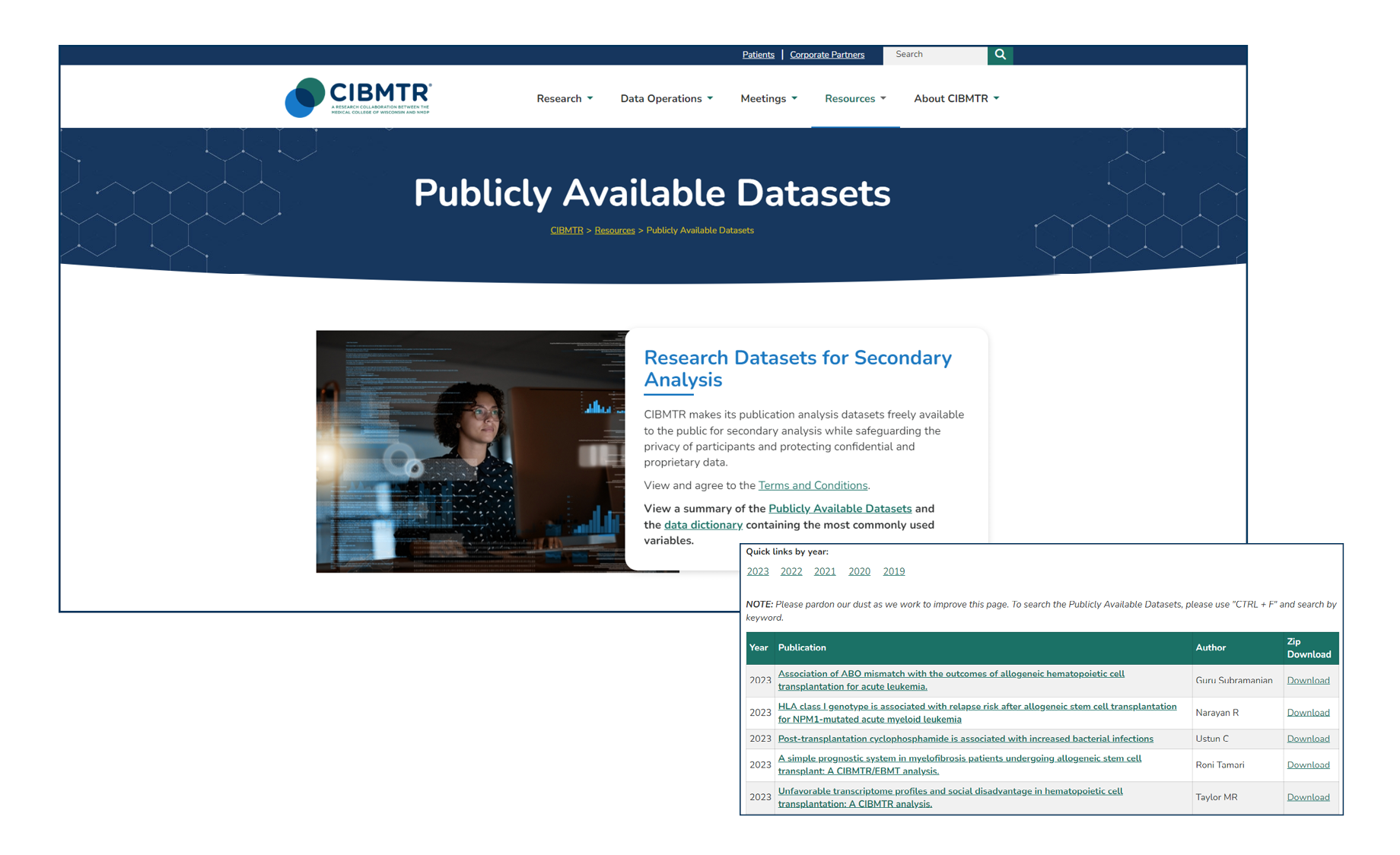 UPDATED: View a summary of the Publicly Available Datasets and the data dictionary containing the most commonly used variables. Use the data dictionary to help identify which dataset you would like to download.
View Full Story
In accordance with the NIH Data Sharing Policy and NCI Cancer Moonshot Public Access and Data Sharing Policy, CIBMTR makes the final datasets from published studies publicly available on CIBMTR’s Research Datasets for Secondary Analysis webpage. These publication analysis datasets are freely available to the public for secondary analysis.
While providing these data, CIBMTR is committed to safeguarding the privacy of participants and protecting confidential and proprietary data. Upon accessing the datasets page on CIBMTR’s public website, the viewer is notified that the dataset was collected by CIBMTR, and CIBMTR’s supporters are listed. The webpage also clearly notes the terms and conditions of dataset usage.
Share Research in Plain Language
By Michelle Dodge
Our study summaries page just got a major upgrade! Search by category, and find what you need faster, at cibmtr.org/summaries.
This new plain-language summary of CIBMTR research may help your patients:
View Full Story

Our Supporters
CIBMTR is supported primarily by Public Health Service U24CA076518 from the NCI, the NHLBI), and the NIAID; U24HL138660 from NHLBI and NCI; 75R60222C00008, 75R60222C00009, and 75R60222C00011 from the HRSA.
View Full Story
Additional federal support is provided by OT3HL147741, P01CA111412, R01CA100019, R01CA218285, R01CA231838, R01CA262899, R01AI128775, R01AI150999, R01AI158861, R01FD008187, R01HL171117, U01AI069197, U01AI184132, U24HL157560, and UG1HL174426.
Support is also provided by Australian Bone Marrow Donor Registry; Boston Children’s Hospital; Fred Hutchinson Cancer Center; Gateway for Cancer Research, Inc.; Jeff Gordon Children’s Foundation; Medical College of Wisconsin; NMDP; Patient Center Outcomes Research Institute; PBMTF; St. Baldricks’s Foundation; Stanford University; Stichting European Myeloma Network (EMN); and from the following commercial entities: AbbVie; Actinium Pharmaceuticals, Inc.; Adaptive Biotechnologies Corporation; ADC Therapeutics; Adienne SA; Alexion; AlloVir, Inc.; Amgen, Inc.; Astellas Pharma US; AstraZeneca; Atara Biotherapeutics; Autolus Limited; BeiGene; BioLineRX; Blue Spark Technologies; Blueprint Medicines; Bristol Myers Squibb Co.; CareDx Inc.; Cordex Biologics Inc.; CSL Behring; CytoSen Therapeutics, Inc.; DKMS; Eurofins Viracor, DBA Eurofins Transplant Diagnostics; Gamida-Cell, Ltd.; Genetix; Gift of Life Biologics; Gift of Life Marrow Registry; HistoGenetics; ImmunoFree; Incyte Corporation; Iovance; Janssen Research & Development, LLC; Janssen/Johnson & Johnson; Jasper Therapeutics; Jazz Pharmaceuticals, Inc.; Karius; Kashi Clinical Laboratories; Kiadis Pharma; Kite Pharma Inc; Kite, a Gilead Company; Kyowa Kirin International plc; Labcorp; Legend Biotech; Mallinckrodt Pharmaceuticals; Med Learning Group; Medac GmbH; Medexus; Melio Healthcare Limited; Merck & Co.; Mesoblast, Inc.; Millennium, the Takeda Oncology Co.; Miller Pharmacal Group, Inc.; Miltenyi Biomedicine; Miltenyi Biotec, Inc.; MorphoSys; MSA-EDITLife; Neovii Pharmaceuticals AG; Novartis Pharmaceuticals Corporation; Omeros Corporation; Orca Biosystems, Inc.; OriGen BioMedical; Ossium Health, Inc.; Pfizer, Inc.; Pharmacyclics, LLC, An AbbVie Company; Pierre Fabre Pharmaceuticals; Registry Partners; Rigel Pharmaceuticals; Sanofi; Sarah Cannon; Seagen Inc.; Servier; Sobi, Inc.; Sociedade Brasileira de Terapia Celular e Transplante de Medula Óssea (SBTMO); Stemcell Technologies; Stemline Technologies; STEMSOFT; Syndax; Takeda Pharmaceuticals; Talaris Therapeutics; Therakos; TScan Therapeutics; US WorldMeds; Vertex Pharmaceuticals; Vor Biopharma Inc.; Xenikos BV.
Careers
Job opportunities on both the CIBMTR MCW and CIBMTR NMDP campuses are listed on CIBMTR’s Careers webpage.
Abbreviations
Need an acronym defined? Review our list of common abbreviations.